

You’ve checked all the boxes. You have the website your designer built, you set up your Google Business Profile, and you’re starting to see some hit in Google Analytics. Now, you’re ready to go one step further.
The question is: do you look for a Google Ads agency, a Meta ads expert, or someone who does both?
Which one should you choose first?
Google ads: capturing the intent (the lower funnel)
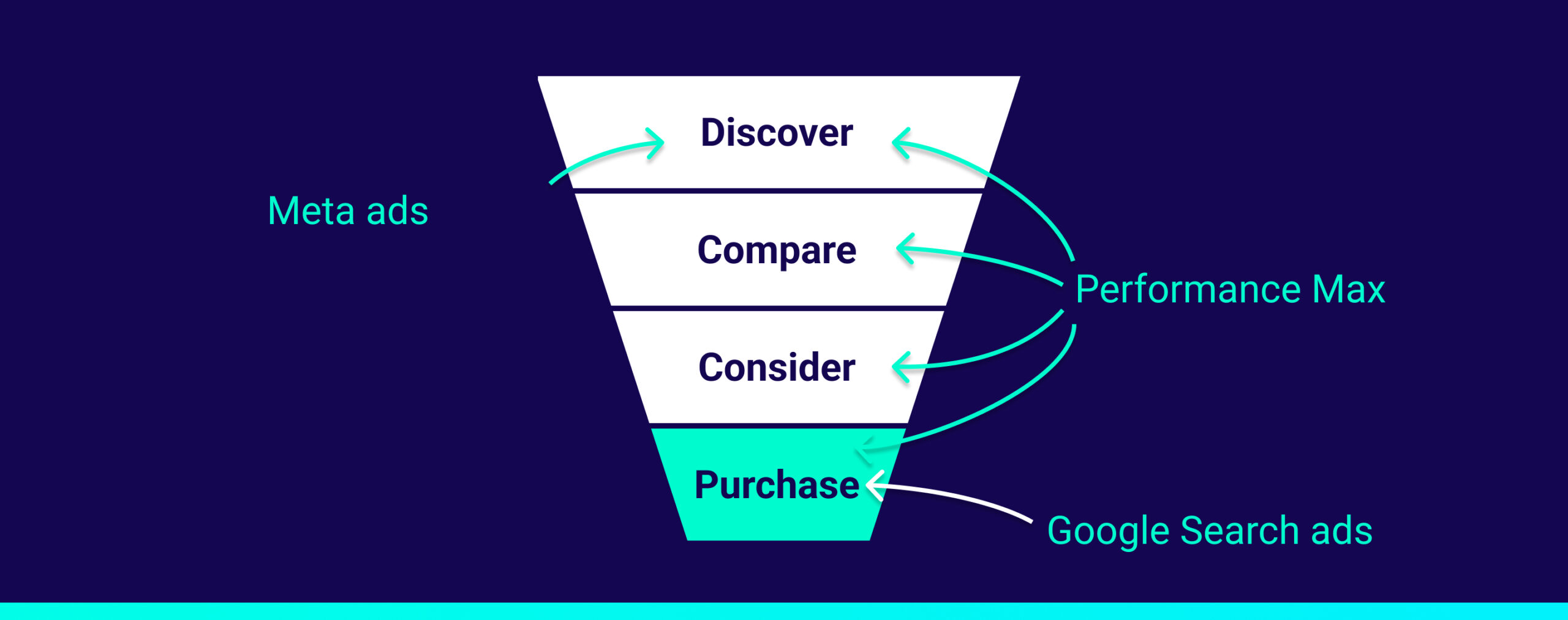
In my experience, Google Ads is often the easiest place to start. Why? Because it sits at the “bottom of the funnel.”
By the time someone goes to Google, they already know what they need. They’ve done their research, they’ve maybe chatted with an AI, and they are ready to buy. They type in a search, look at those top four links, and make a move.
For products: They usually pick the best price or the most reliable shipping/return conditions.
For services: They’ll likely ask for offers from all four of those top links.
To be in that top list, you have to pay. It’s a bidding war, especially when Google knows a user is close to converting. The beauty of Google Ads is its transparency: you can clearly see which click turned into which lead.
You can then benchmark it directly against your revenue. It’s a straight line from Swiss franc spent to conversion.
We have an interesting post Google being your friend and transparent…
Meta ads: creating the demand (the upper funnel)
Facebook and Instagram ads work differently. They sit more in the discovery phase.
Let’s take solar panels as an example. A homeowner might know they want them on their roof. But they don’t know the options or the implications yet. They are watching YouTube videos, scrolling Instagram stories, and they they are hit with Meta ads. The ads will further educate them and improve brand awareness.
The will inevitably trust your brand more, if they have seen it a bunch of times in the past weeks. Together with high quality content.
They are growing their interest and learning about the product. This is impossible to do with Google Search ads.
Meta is where you build trust in your brand and explain your story.
- Cheaper exposure: Clicks and impressions are generally cheaper than a high-intent Google search click.
- Brand storytelling: Unlike a text-based Google ad, Meta allows you to show your face as a founder, share customer stories, and explain the “why” behind your product.
- Demand generation: People don’t “need” solar panels the same way they need a plumber for a burst pipe. You have to convince them of the benefits to generate the demand.
Our strategy is to combine them
What is the right way to do it? We typically follow a three-step roadmap:
- Protect your brand: First, we make sure that if someone specifically searches for your company name, you show up at the top- Not four of your competitors. So start with a Google ads brand campaign.
- Capture local intent (if relevant): We set up localized ads so if someone searches for a “plumber in Züzrich,” they find you immediately. Still Google Ads.
- Generate demand: With the foundation set, we move to Meta (or Google Display/YouTube) to build visibility. We use these platforms to share the features and stories that Google search ads can’t communicate.
A note on performance max
Today, you don’t always have to choose. Tools like Google’s Performance Max campaigns bridge the gap. They show video ads on YouTube or images ads on partner sites (upper funnel) and then hit the user with a text link on the search network once they show real interest (lower funnel).
The advantage? Google sees the whole journey. It knows which video you watched before you finally searched for the brand, allowing for much smarter bidding.
Conclusion
If you need leads now, start with Google Search. If you have a product that requires education or you want to build a long-term brand, Meta and Video are your best friends.
The goal isn’t just to be seen, t’s to be found at exactly the right moment in the journey.
Is your business being found by the right people? We don’t just “run ads”, we build the full funnel from discovery to conversion. Let’s discuss which platform makes the most sense for your current stage of growth.